
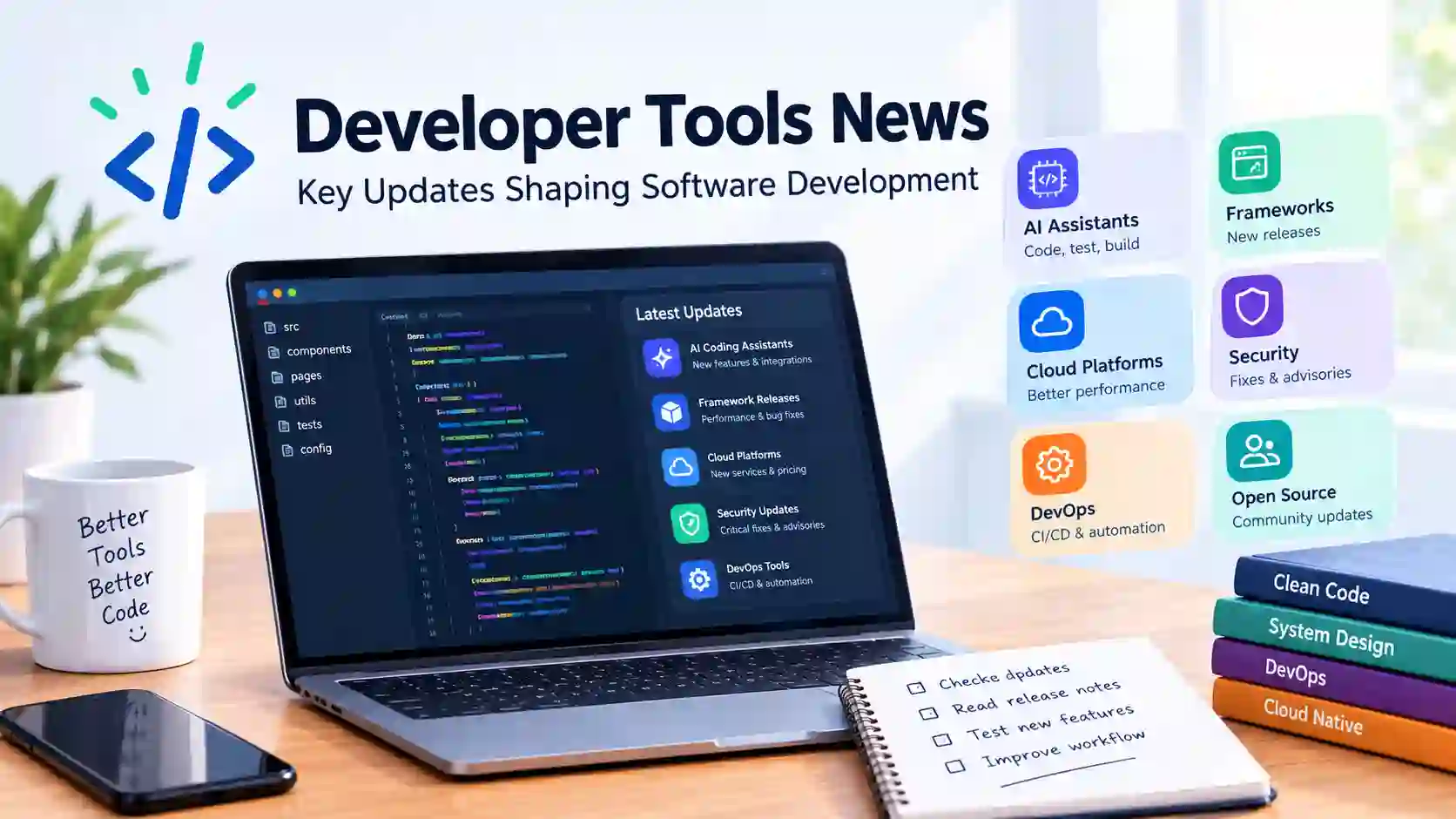
Developer tools news helps software teams understand changes that affect how they build, test, secure, and launch applications. New coding assistants, faster development platforms, and improved security features can change everyday work. However, developers often face too many announcements across different websites. Finding useful updates becomes difficult when every company promotes its latest release as a major breakthrough.
Missing an important update can lead to wasted time, outdated workflows, or avoidable security problems. AI coding assistants are also changing how developers write and review code. For example, tools such as Claude Code CLI can help developers work with code through command-line workflows. However, every new tool needs careful evaluation before adoption. Following reliable sources and testing useful features helps teams make informed decisions.
What Is Developer Tools News and Why Does It Matter?
Developer tools news covers announcements about software used to create, test, manage, secure, and maintain digital products. These updates include programming editors, code assistants, testing frameworks, cloud platforms, application programming interfaces, and deployment systems. The news may describe a new feature, a security fix, a pricing change, or a tool that improves collaboration. Therefore, it helps developers understand which changes deserve attention.
Modern software projects depend on several tools working together. For example, a team might write code in an editor, manage changes through Git, test applications automatically, and deploy updates through cloud services. When one part changes, other parts may need adjustments. Reliable reporting helps teams prepare for these changes, compare alternatives, and avoid unnecessary disruption.
Which Updates Matter Most to Developers?
The most useful updates solve real problems rather than simply attracting attention. A faster build process, a safer authentication method, or better debugging support can improve daily work. Likewise, a change in a tool’s licensing terms may affect a company’s budget. Developers should examine how each announcement changes their current tasks before deciding whether it deserves action.
However, not every release requires immediate adoption. Some features remain experimental, while others work only with specific programming languages or paid plans. Checking the official documentation helps clarify these limits. As a result, teams can focus on updates that match their technical needs instead of following every industry headline.
How Developer Tools Influence Software Projects
Development tools affect more than the speed of writing code. They also influence teamwork, code quality, security, maintenance, and delivery schedules. A reliable testing tool can catch problems before release, while useful monitoring software can reveal failures after deployment. Consequently, choosing suitable tools can improve the entire software development process.
On the other hand, poorly chosen tools can increase complexity. Teams may face overlapping subscriptions, difficult integrations, or workflows that depend on one vendor. Therefore, developer tools news is most valuable when it explains practical benefits, known limitations, and possible migration challenges. This broader view supports better decisions over time.
AI Coding Assistants Are Changing Developer Workflows
Artificial intelligence has become an important part of modern software development. AI coding assistants can suggest code, explain unfamiliar functions, generate tests, and help developers understand errors. Depending on the product, some assistants can also work across multiple files or support more complex coding tasks. These abilities can save time, but their usefulness depends on the task and the quality of the output.
Several major technology companies now offer AI features for developers. GitHub Copilot, OpenAI coding tools, and Anthropic’s Claude Code are examples of products in this space. Their capabilities, integrations, and usage limits differ. Developers should review current product documentation before comparing them because features and prices can change between releases.
What AI Coding Tools Can Do
AI coding tools can help with repetitive work, such as creating basic functions or explaining common programming patterns. They can also suggest unit tests and help investigate error messages. For a developer learning a new framework, these suggestions may provide a useful starting point. However, generated code still needs careful review and proper testing.
More advanced assistants may support tasks that involve several files or multiple development steps. For example, an assistant might help identify where a feature belongs and suggest related changes. Nevertheless, the developer remains responsible for architecture, correctness, and security. A convincing suggestion is not proof that the code works as intended.
How Developers Should Evaluate AI Assistants
A useful comparison should examine accuracy, supported languages, integrations, privacy controls, and total cost. Developers should also explore different AI platforms to understand their practical uses. For example, Flint AI can be explored as part of broader research into AI-powered tools and workflows. However, each platform serves different needs, so developers should verify its current features and test it against real project requirements before choosing a solution.
Teams should begin with a small, low-risk trial. They can measure how much time the assistant saves and how often its suggestions require corrections. In addition, they should review company rules about sharing source code with external services. This process provides stronger evidence than relying on product demonstrations alone.
New Programming Tools and Framework Releases
Programming languages, frameworks, and libraries change as developers discover better ways to build software. A new release may improve performance, fix bugs, add useful features, or remove outdated functions. However, major updates can also introduce breaking changes. Developer tools news helps teams identify these changes before upgrading important projects.
Framework announcements deserve particular attention when they affect applications already in production. A small change in a dependency can influence build systems, testing tools, or other libraries. Therefore, developers should read migration guides and release notes before updating critical systems. Careful planning reduces the chance of unexpected failures.
Why Release Notes Deserve Attention
Release notes explain what changed between software versions. They may list new features, corrected defects, security fixes, known issues, and changes that require action. Official release notes usually provide more reliable technical details than short summaries on social media. They also help developers identify whether an update solves a problem they already face.
However, reading every line of every release can take too much time. Developers can first review headings about security, breaking changes, performance, and features used by their projects. They can then examine the details that apply to their systems. This approach keeps research focused without overlooking important risks.
How to Upgrade Frameworks Safely
A safe upgrade begins with checking compatibility. Developers should confirm supported language versions, dependencies, operating systems, and deployment environments. Next, they should review migration instructions and identify any code that may require changes. Testing the upgrade in a separate branch or staging environment helps reveal problems before production.
Teams should also prepare a rollback plan for important applications. Automated tests, backups, and clear deployment records make recovery easier if an upgrade fails. Furthermore, developers should avoid combining many unrelated changes into one release. Smaller upgrades make it easier to identify the cause of a problem and correct it quickly.
Cloud Development Platforms and DevOps Updates
Cloud platforms allow teams to build, test, host, and deploy applications using remote computing resources. Developer platforms can also connect source control, automated tests, deployment workflows, and monitoring systems. Updates in this area may improve reliability, simplify setup, or add controls for managing access. These changes matter to teams building applications for growing numbers of users.
DevOps brings development and operations work closer together. The goal is to deliver software reliably through collaboration, automation, and feedback. Tools such as GitHub Actions and cloud deployment services can automate repeated tasks. Still, automation needs careful configuration, because an incorrect workflow can introduce failures across multiple environments.
Why CI/CD Tools Matter
Continuous integration and continuous delivery, often called CI/CD, help teams test and deliver code through repeatable steps. When a developer submits a change, automated checks can run before the team merges it. Depending on the setup, later steps may build the application, run further tests, or prepare a deployment.
These workflows can reduce manual effort and reveal problems earlier. However, they are only effective when tests provide useful coverage and pipelines remain secure. Developers should monitor failed jobs, review permission settings, and protect sensitive credentials. As tools add new automation features, teams must check their default settings and access controls.
What to Check in Cloud Platform Announcements
Cloud updates may change service availability, resource limits, pricing, authentication methods, or deployment options. These details can affect both small projects and large businesses. For instance, a pricing change may increase monthly costs even when an application requires no code changes. Therefore, platform announcements deserve attention beyond their headline features.
Before adopting a new service, teams should check supported regions, service limits, data handling, and recovery options. They should also consider how difficult it would be to move elsewhere later. Although a convenient platform can speed up development, excessive dependence on one provider may create future migration costs.
Software Security and Supply Chain Protection
Software security remains a major concern for developers and technology businesses. Applications often depend on external packages, build tools, plugins, and cloud services. A weakness in any of these parts can create risks for the finished product. Consequently, developer tools news should include security advisories, dependency updates, and changes to secure development practices.
The software supply chain includes the components and processes used to build an application. If a package contains malicious code or an attacker compromises a development account, the risk can spread beyond one project. Developers need to understand where dependencies come from and which permissions their tools receive. Security checks should remain part of routine development rather than an occasional task.
Why Dependency Updates Are Important
Dependencies save time because developers can reuse code instead of building every feature themselves. However, those libraries may contain defects or security weaknesses. Project maintainers regularly release patches, but teams must still identify affected versions and apply suitable updates.
Automated dependency scanners can help find known vulnerabilities. Developers should review the severity, affected versions, available fixes, and practical exposure before choosing a response. They should also remove packages that no longer serve a purpose. Keeping dependencies limited and current makes projects easier to maintain.
How to Follow Security Advisories
Official security advisories explain which products are affected and what users should do. Useful details include vulnerability identifiers, affected versions, severity ratings, patches, and temporary workarounds. The GitHub Security Advisories database is one source for information about vulnerable software packages.
However, a severity score does not describe every project’s actual risk. A vulnerable feature may not be exposed in a particular application, while another weakness may affect a critical public service. Teams should combine advisory details with their own system knowledge. They should then patch, test, and document the response according to the risk.
Open-Source Projects and Developer Community News
Open-source software allows people to inspect, use, and often modify code under a published license. Many development tools rely on open-source libraries and community contributions. Updates may include new maintainers, feature releases, funding changes, license revisions, or discussions about a project’s future direction. These developments can influence which tools remain suitable for long-term use.
Community activity can reveal whether a project is healthy, but popularity alone is not enough. A widely used project may still lack active maintenance or clear security practices. Likewise, a smaller project may provide strong documentation and timely fixes. Developers should assess the project’s actual condition before making it part of a critical application.
How to Assess an Open-Source Project
A useful review starts with the project’s release history and issue tracker. Developers can check whether maintainers respond to bug reports and publish security updates. Clear installation instructions and recent documentation also help users judge the project’s reliability.
Licensing deserves attention as well. Different licenses place different conditions on software use, distribution, and modification. Businesses should review the applicable license before including a package in commercial products. When requirements are unclear, legal advice may be appropriate.
Why Community Discussions Matter
Community discussions often explain problems that formal announcements leave out. Developers may share migration issues, performance comparisons, workarounds, or examples from real projects. These reports can help readers decide whether a new feature is ready for wider use.
Still, online comments should not replace official documentation. A reported bug may affect only one environment, and a suggested fix may introduce other problems. Developers should reproduce important findings when possible. Comparing community feedback with release notes creates a more balanced picture of a tool’s strengths and weaknesses.
How to Find Reliable Developer Tools News
The quality of a technology update depends on its source and supporting evidence. Official product blogs provide direct announcements, while documentation explains how features work. Independent technical publications may add useful comparisons and practical testing. Using several source types helps readers avoid relying on a single company’s claims.
A good research routine does not need to consume hours each day. Developers can follow a small group of relevant sources and review important updates on a regular schedule. They should focus on the tools used by their projects and the changes most likely to affect security, cost, or productivity.
Which Sources Are Worth Following?
Official engineering blogs and product release pages are useful for confirming technical changes. Developers can also explore technology news resources, including this guide to Drovenio’s latest technology news, to discover additional ways of following industry developments.
However, official documentation remains essential when checking specific features, compatibility, and security details. Combining industry coverage with primary sources helps readers build a more reliable picture of important updates.
How to Separate Useful News From Hype
Technology headlines sometimes make broad promises without explaining how a feature performs. Readers should look for clear evidence, such as documented capabilities, reproducible tests, known limitations, and supported use cases. They should also distinguish between features that are generally available and those still in preview.
A practical checklist can make this review easier:
- Confirm the announcement through an official source.
- Check release status, pricing, and supported platforms.
- Look for security concerns and migration requirements.
- Test the feature with a realistic task.
- Compare its results with the current workflow.
These steps help developers spend less time chasing trends. They also create a clearer record of why a tool was adopted or rejected.
How Developer Tools News Can Improve Daily Work
Following industry updates becomes valuable when information leads to better decisions. Developers can use relevant announcements to improve testing, reduce repetitive work, strengthen security, or simplify deployment. However, the best result is not always adopting a new product. Sometimes, an update confirms that an existing tool remains the better choice.
A small evaluation process can help teams turn news into action. First, they identify the problem an announcement claims to solve. Next, they check compatibility and risks. Then, they test the feature against clear goals and document the outcome. This approach makes tool selection more consistent and easier to explain to other team members.
Build a Simple Update Review Routine
A regular review can prevent important announcements from getting lost. Developers might check security advisories more frequently than general product news because security issues can require urgent action. Framework upgrades and major platform changes can receive a separate review based on project schedules.
The routine should remain flexible. A critical vulnerability may require immediate attention, while a minor editor feature can wait. Teams should record the update, its relevance, its owner, and any next steps. This simple process reduces repeated research and helps colleagues understand why a change matters.
Measure Whether a New Tool Helps
Before testing a tool, developers should define what success means. Useful measures may include build time, bug rates, time spent on repetitive tasks, or the effort required to onboard new team members. The right measure depends on the problem being solved.
After testing, teams should compare results with their previous workflow. They should also consider training time, maintenance costs, privacy, and reliability. A tool that saves a few minutes but adds significant complexity may not be worthwhile. Decisions based on evidence usually produce better long-term results than decisions based on excitement.
Frequently Asked Questions
What Does Developer Tools News Cover?
Developer tools news covers updates about coding software, frameworks, testing systems, cloud platforms, AI assistants, and security tools. It may include product launches, release notes, pricing changes, and important fixes. Developers use these updates to understand changes that could affect their work.
Where Can Developers Find Reliable Tool Updates?
Official engineering blogs, product documentation, release notes, and security advisories are strong starting points. GitHub and Google publish updates relevant to developers. Independent technical publications can provide additional testing and comparisons, but important claims should be checked against primary sources.
Why Is Developer Tools News Important?
It helps developers discover useful features, identify security risks, and prepare for changes in software platforms. It can also reveal pricing or licensing updates that affect project costs. However, teams should assess each update before changing established workflows.
How Often Should Developers Check Tool News?
The best schedule depends on the tools and risks involved. Security advisories may need frequent checks, while general product announcements can be reviewed weekly. Teams should prioritize urgent fixes and updates that directly affect their projects.
How Is AI Changing Software Development Tools?
AI assistants can suggest code, explain functions, generate tests, and support debugging. Some tools can also help with tasks across multiple files. However, developers must review generated output for accuracy, security, and compatibility before using it.
Should Developers Adopt Every New Tool?
No, because each tool introduces learning, maintenance, and sometimes subscription costs. Developers should test tools against real needs and compare their results with existing solutions. Adoption makes sense when the benefits justify the added complexity.
Why Are Software Release Notes Important?
Release notes explain new features, bug fixes, security patches, and breaking changes. They help developers understand whether an update affects their applications. Reviewing them before upgrading can reduce compatibility problems and unexpected downtime.
How Can Developers Stay Updated Without Wasting Time?
They can follow a short list of official sources and review updates on a regular schedule. A simple checklist can filter announcements by security, compatibility, cost, and practical value. This approach keeps the research focused on changes that matter.
Conclusion:
Developer tools news helps software professionals understand changes in AI coding, frameworks, cloud platforms, open-source projects, and security practices. However, useful information requires more than reading headlines. Developers should confirm announcements, examine documentation, and test important features before changing established systems. By focusing on real project needs, teams can improve their workflows while avoiding unnecessary costs and risks.
For more insights into AI, software, and emerging technology, explore AI Journal at https://aijournal.it.com/. Follow reliable sources, review important releases, and compare new tools with existing solutions. A consistent learning habit can help developers make informed choices as software development continues to evolve.