
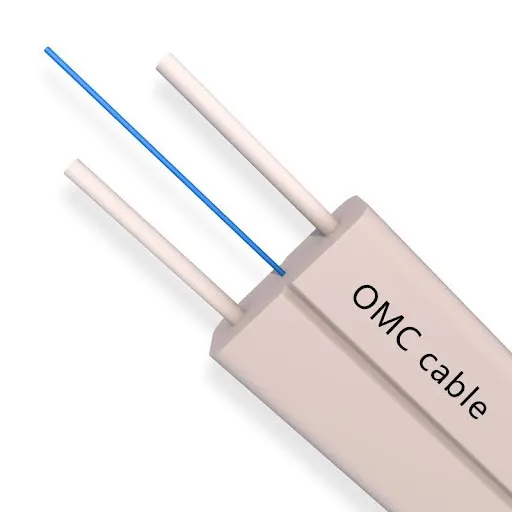
Selecting the right FTTH drop cable is an important step in building a reliable fiber-optic network. Although drop cables are often shorter than feeder and distribution cables, they directly connect the access network to the subscriber. Their construction must match the installation route, environmental conditions, and performance requirements of the project.
For internet service providers, telecom contractors, and network installers, understanding the available cable options can help prevent installation problems and unnecessary maintenance costs.
Understanding FTTH Drop Cable Design
An FTTH drop cable carries optical signals from a distribution point to a subscriber’s premises. It is typically used for the last section of a fiber-to-the-home connection, making it a key component of residential and commercial broadband deployments.
The cable usually contains one or more optical fibers, protective strength members, and an outer sheath. Depending on the design, the strength members may consist of FRP rods, steel wires, or a dedicated messenger element for aerial installation.
Each part serves a purpose. The optical fiber transmits data, strength members help manage mechanical loads, and the outer jacket protects the cable against environmental exposure and physical damage.
Factors to Consider Before Buying
1. Installation Environment
The first consideration is where the cable will be installed. Indoor routes may require a compact design that can be neatly secured along walls or inside buildings. Outdoor installations may require protection against sunlight, moisture, temperature changes, and other environmental conditions.
A cable designed for indoor use should not automatically be assumed suitable for long outdoor exposure. Always confirm the manufacturer’s intended application.
2. Fiber Type and Count
Many FTTH drop cables use single-mode fiber, including bend-insensitive options from the G.657 family. These fibers can be useful in residential environments where cables must pass through corners or confined spaces.
Fiber count depends on the network design. A single fiber may support a typical subscriber connection, while a two-fiber cable can provide an additional fiber for specific operational or future requirements.
3. Mechanical Strength
Drop cables must withstand the stresses associated with their installation method. A cable routed along an indoor wall has different requirements from a cable suspended between poles.
Check the published tensile strength, crush resistance, and minimum bend radius. For aerial routes, select a suitable self-supporting design and confirm the permitted span and installation loads. Never rely on the optical fiber itself to carry mechanical tension.
4. Outer Jacket Material
The jacket should match the environment in which the cable will operate. LSZH materials may be specified for certain indoor environments because they are designed to produce limited smoke and no halogen emissions under defined test conditions. Outdoor jackets may need UV and weather resistance.
Project specifications and applicable local fire and building regulations should guide the final decision.
Common FTTH Drop Cable Designs
Flat drop cables are often selected for indoor routing and building-entry applications because their compact profile can simplify surface installation. They may include parallel strength members that help protect the fiber during handling.
Self-supporting drop cables are designed for appropriate aerial installations. Depending on the model, they may include a metallic messenger or an all-dielectric supporting structure. The correct choice depends on the required span, loading, and proximity to electrical infrastructure.
Round drop cables can be suitable for selected ducted or protected installations. Their suitability depends on cable construction, diameter, pulling limits, and pathway conditions.
Comparing these designs before purchasing can help contractors match the cable to the actual deployment rather than choosing solely on price.
Why Cable Quality Matters
Poorly selected or incorrectly installed cables can create avoidable service issues. Tight bends, excessive pulling tension, crushed sections, and damaged connectors may increase optical loss or interrupt the connection.
A suitable cable specification helps installers work efficiently and supports stable performance throughout the network’s operating life. However, cable quality should be assessed through documented technical specifications, appropriate testing, and compliance with the requirements of the project.
Buyers should request a datasheet and verify the fiber standard, cable dimensions, mechanical ratings, temperature range, and jacket properties. For pre-terminated products, they should also confirm connector type, polishing style, and optical test results.
Installation Best Practices
Before installation, measure the route and plan the cable path. Avoid unnecessary bends and sharp edges, and use appropriate clips or supports that do not crush the cable.
During pulling, follow the manufacturer’s maximum pulling force. Keep connector ends protected from dust and physical impact. Once installation is complete, inspect the cable route and test the optical connection using suitable equipment.
For outdoor deployments, confirm that mounting hardware, closures, and entry points are compatible with the cable design. A complete installation requires suitable accessories as well as the correct cable.
Questions to Ask a Supplier
Before placing an order, ask whether the product is intended for indoor, outdoor, aerial, or duct installation. Confirm available fiber counts, fiber grades, jacket materials, strength-member options, and standard reel lengths.
It is also useful to request production quality information, packaging details, delivery estimates, and any available compliance documentation. For large projects, a sample evaluation may help verify that the product meets the installation team’s requirements.
Conclusion
Choosing the right FTTH drop cable involves more than comparing dimensions or prices. Buyers should evaluate the installation environment, fiber specifications, mechanical strength, jacket material, and termination requirements. A cable matched to the project can simplify deployment and help maintain dependable fiber connectivity for subscribers.