
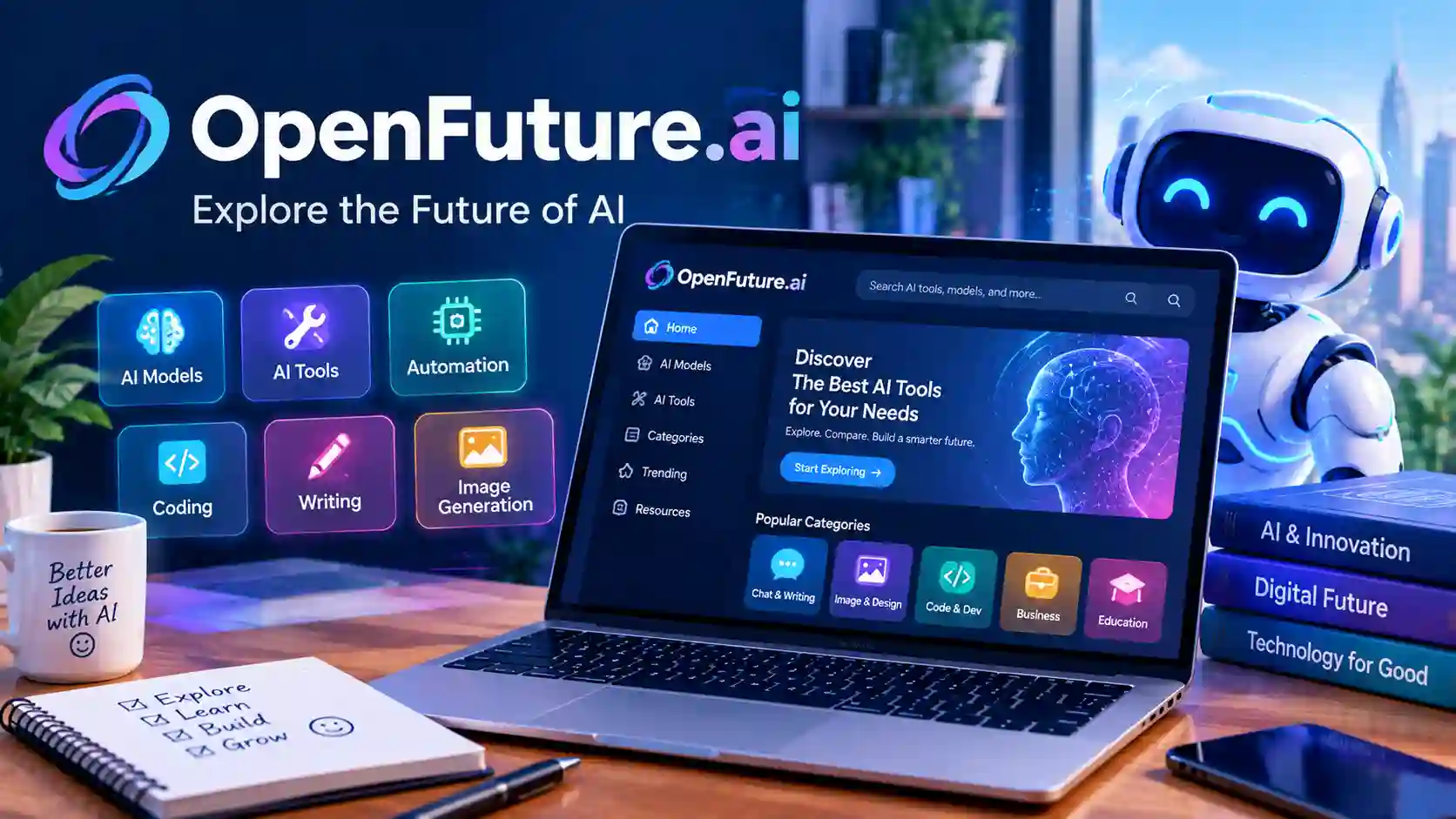
Artificial intelligence is changing how people work, learn, create, and solve everyday problems. However, finding the right AI tool can feel difficult because thousands of options now exist online. OpenFuture.ai gives users a practical way to explore modern AI tools, models, and applications in one place. It can help readers understand new AI solutions without spending hours searching through unrelated websites.
For beginners and experienced users, discovering useful AI technology requires more than simply finding popular tools. Users need clear information about what each solution does and where it can provide value. OpenFuture.ai can make this discovery process easier by bringing different types of AI resources together. This guide explains what the platform offers, how it can support AI discovery, and what users should consider when exploring AI tools.
What Is OpenFuture.ai?
OpenFuture.ai Explained in Simple Terms
OpenFuture.ai is an AI-focused web platform built around discovering and exploring artificial intelligence resources. The platform fits into a growing ecosystem of websites that help people understand available AI products and technologies. Instead of treating AI as one single product, this approach recognizes the wide range of tools available today.
For beginners, that broader view can make AI easier to understand. Users can explore different types of artificial intelligence resources based on their interests and needs. Meanwhile, experienced users can use discovery platforms to identify technologies they may not have encountered before.
The Purpose Behind AI Discovery Platforms
AI discovery platforms solve a practical problem. The number of available AI solutions continues to grow, while users have limited time for research. A centralized discovery experience can reduce the effort required to find relevant options.
However, discovery does not automatically mean recommendation. Users should still review each product carefully before relying on it. Features, pricing, privacy policies, availability, and model capabilities can change over time. Therefore, independent verification remains important.
Who Can Explore OpenFuture.ai?
OpenFuture.ai can be useful for several types of AI users. Beginners may use it to discover unfamiliar AI concepts. Developers may explore emerging technologies and model-related resources. Content creators can also research tools that support creative workflows.
Business users may have another reason to explore AI platforms. They often need solutions for automation, content, research, communication, and productivity. Consequently, an organized AI discovery platform can become a useful starting point during early research.
How OpenFuture.ai Fits Into Modern AI Discovery
AI Models and Artificial Intelligence
Modern AI depends on models that can process information and produce useful outputs. Different generative AI models are designed for different tasks, including language generation, image creation, coding, and other forms of content production. Some models focus on language, while others work with images, audio, code, or multiple formats.
Platforms such as OpenFuture.ai can help users understand this wider model ecosystem. Instead of viewing AI as a single technology, users can recognize differences between tools and model types. This understanding can make later tool selection much more informed.
AI Tools for Everyday Tasks
AI has moved beyond research laboratories and specialist environments. Today, people use AI for writing, summarizing, brainstorming, coding, image creation, learning, and many other tasks. This wider adoption has created a large market of specialized applications.
An AI discovery platform can help users explore that market. For example, a person looking for writing assistance may approach the search differently from a developer seeking coding support. Therefore, task-based discovery can be more useful than simply searching for the newest AI product.
Comparing Different AI Solutions
Comparison is one of the most important parts of responsible AI discovery. A tool may look impressive but still fail to match a user’s actual requirements. Another solution may offer fewer features but provide a better workflow for a specific task.
Users should therefore compare practical factors before choosing. These factors can include ease of use, supported features, output quality, cost, privacy, integrations, and limitations. As a result, AI discovery becomes a research process rather than a simple popularity contest.
Key Things Users Should Look For on OpenFuture.ai
Clear Information About AI Products
Clear information helps users understand what an AI product actually does. A useful listing should make the main purpose easy to identify. It should also avoid confusing technical language when simpler explanations are possible.
Furthermore, users benefit from knowing whether a product targets beginners, professionals, developers, or businesses. That context can make a major difference during selection. A tool designed for developers may not provide the easiest experience for a casual user.
Practical AI Features
Features should always connect to a real use case. A long feature list does not necessarily mean a tool is more useful. Instead, users should ask whether those features solve the problem they actually have.
For example, a content creator may need editing and idea generation. A developer may care more about coding support and technical integrations. Meanwhile, a student may prioritize explanation, research assistance, and learning support.
Pricing and Access Information
Pricing can strongly influence AI tool selection. Some services provide free access with limitations, while others use subscriptions or usage-based pricing. These models can change as companies update their products.
Therefore, users should verify current pricing directly before making a purchase. Information found on third-party discovery platforms can be useful for research, but official product pages remain important for final confirmation.
Privacy and Data Handling
Privacy deserves special attention when using AI services. Users may enter documents, business information, personal details, or other sensitive material. Consequently, the platform’s privacy policy and data practices should be reviewed before important information is submitted.
This consideration becomes even more important for businesses. Companies may have internal rules about where data can be processed. Therefore, AI discovery should include privacy checks rather than focusing only on features and price.
Benefits of Using an AI Discovery Platform
Faster AI Research
One major benefit is reduced research time. Users can begin with a focused AI resource rather than searching across countless websites. This can make the early discovery stage much easier.
However, faster research should not mean careless research. Users still need to verify important claims and test relevant tools. The strongest workflow combines centralized discovery with direct product evaluation.
Discovering Less Familiar Tools
The AI market contains many products that receive limited mainstream attention. Some smaller tools may solve specific problems very effectively. Discovery platforms can make these alternatives easier to find.
This can be especially helpful for users with unusual requirements. Instead of choosing the most famous product automatically, they can explore several options. As a result, users may find solutions that better match their workflow.
Understanding AI Categories
AI can seem confusing because many products use similar language. Categories can help separate different types of solutions. Common areas include text generation, image creation, coding, research, productivity, education, and automation.
Understanding these categories also improves search quality. A user who knows the type of tool required can narrow the options more quickly. Therefore, AI discovery can also become a learning process.
OpenFuture.ai for Different Types of Users
Beginners Exploring Artificial Intelligence
Beginners often need simple explanations before trying advanced AI tools. They may not understand differences between models, applications, assistants, and specialized platforms. A structured discovery experience can help introduce these concepts gradually.
For beginners, the best approach is to start with one clear goal. For example, a user might want help with writing or research. After learning one workflow, that user can explore more advanced AI capabilities.
Developers and Technical Users
Developers usually evaluate AI from a different perspective. They may care about models, APIs, integrations, performance, documentation, and supported workflows. Therefore, technical users often need deeper information than casual users.
AI discovery platforms can still help developers during early research. They can reveal products and technologies worth investigating. However, developers should always inspect official documentation before building important applications around an AI service.
Content Creators
Content creators have many possible AI use cases. They may use AI for brainstorming, outlines, editing, research, images, video concepts, or repetitive tasks. Educational creators can also explore tools such as Flint AI when developing learning-focused content and workflows. However, AI should support the creative process rather than replace careful review.
Creators should also check generated information before publication. AI systems can produce inaccurate or outdated statements. Therefore, human editing remains important when accuracy and trust matter.
Businesses and Teams
Businesses often need AI solutions that fit existing workflows. A useful tool must work with team processes, security requirements, budgets, and technical systems. Consequently, business adoption requires more planning than individual experimentation.
AI discovery can help teams create an initial shortlist. Yet, teams should test shortlisted products before making larger commitments. Pilot projects can reveal practical limitations that may not appear during a simple feature comparison.
How to Evaluate AI Tools Found Through OpenFuture.ai
Define the Main Problem First
The first step should always be identifying the problem. Users should know what they want the AI tool to accomplish. Without that goal, feature comparisons can become distracting.
For instance, someone seeking writing support should define the type of writing involved. A marketer, student, developer, and journalist may need very different capabilities. Therefore, the use case should guide the entire evaluation process.
Test Realistic Examples
Testing with realistic examples provides more useful information than reading feature lists alone. Users should create sample tasks that resemble their actual work. This approach reveals how the tool performs in practical situations.
Testing should also include difficult examples. Easy prompts can make almost any AI tool look impressive. More realistic tasks provide a better picture of strengths, weaknesses, and limitations.
Check Accuracy and Reliability
AI output can vary between tasks. A tool may perform well with simple requests but struggle with complex information. Therefore, accuracy should be tested before important decisions depend on the output.
Users should also verify factual claims independently. This is especially important for medical, financial, legal, academic, and professional content. Human review remains an important part of responsible AI use.
Review the User Experience
A technically strong AI tool can still become frustrating if its interface is difficult. Users should consider navigation, response speed, controls, exports, and available settings. These details can affect daily productivity.
Moreover, a simpler tool may sometimes provide a better experience. Users do not always need the most advanced system available. The best option usually depends on the actual workflow and level of technical knowledge.
OpenFuture.ai and the Future of AI Discovery
AI Tools Will Continue Expanding
The AI ecosystem is unlikely to remain static. New applications, models, features, and workflows continue to appear. As this ecosystem expands, users will need better ways to organize their choices.
Discovery platforms can become more useful as the number of available solutions increases. They can help users understand categories and identify possible options. Still, quality information and regular updates will remain essential.
AI Search Will Become More Task Focused
AI discovery is gradually moving toward task-based searches. Instead of asking for the newest AI tool, users may search for a solution to a specific problem. This shift can produce more useful results.
For example, users may search for an AI tool for research, coding, presentations, customer support, or education. This approach focuses on outcomes rather than technology names. Consequently, AI discovery can become more practical for everyday users.
Human Judgment Still Matters
AI platforms can make discovery easier, but they cannot remove the need for human judgment. Users still need to evaluate accuracy, privacy, cost, reliability, and suitability. These factors depend heavily on the individual situation.
Therefore, OpenFuture.ai should be viewed as part of the AI research process. It can help users explore possibilities, while final decisions should come from careful testing and verification.
Practical Tips for Exploring OpenFuture.ai
Start With One Specific Goal
A focused goal makes AI discovery much easier. Instead of exploring every available category, users can begin with one task. This could involve writing, coding, research, design, education, or productivity.
After finding suitable options, users can compare them against the same requirements. This method reduces confusion and makes the final decision easier. It also prevents users from collecting tools they never actually use.
Compare Before Choosing
Users should avoid selecting the first interesting AI tool they find. A short comparison can reveal important differences. Features, pricing, privacy, ease of use, and output quality should all receive attention.
Additionally, users should look beyond marketing claims. Product descriptions often highlight strengths while giving less attention to limitations. Independent testing can provide a more realistic understanding of the experience.
Keep AI Workflows Organized
AI tools become more useful when they fit into a clear workflow. Users should avoid switching between many applications without a reason. A small set of reliable tools can often be easier to manage.
Regularly reviewing the tool collection can also help. Unused subscriptions and redundant applications can create unnecessary costs. Therefore, users should keep only the solutions that provide practical value.
Frequently Asked Questions About OpenFuture.ai
What is OpenFuture.ai?
OpenFuture.ai is an AI-focused web platform for exploring artificial intelligence resources. It can serve as a starting point for users researching different AI products and technologies. Users should verify current product details directly before making important decisions.
Is OpenFuture.ai an AI model?
OpenFuture.ai should not automatically be confused with an individual AI model. It is better understood as an AI-focused platform or discovery resource. The specific products and information available can change over time.
Who can use OpenFuture.ai?
AI beginners, developers, creators, students, and business users may find AI discovery platforms useful. Each group can approach the platform with different goals. The value depends on how well the available information matches the user’s needs.
Can OpenFuture.ai help users find AI tools?
AI discovery is one of the main reasons users may explore an AI-focused platform. Such platforms can help organize information about different AI solutions. However, users should check official product pages before relying on current features or pricing.
Is OpenFuture.ai free?
Access and pricing can depend on the specific features or services available on the platform. Users should check the current official website for the latest information. Pricing details can change, so older third-party information may not remain accurate.
Is OpenFuture.ai useful for beginners?
An AI discovery platform can be useful for beginners because it can introduce different AI categories. Beginners should start with simple tasks rather than exploring every option at once. This approach makes the learning process easier.
Can businesses use AI discovery platforms?
Businesses can use AI discovery resources during early research and technology evaluation. However, business adoption should include privacy, security, cost, compliance, and integration checks. A discovery platform should therefore be treated as a research starting point.
What should users check before choosing an AI tool?
Users should review the tool’s purpose, features, pricing, privacy practices, reliability, and ease of use. They should also test realistic tasks before making important decisions. Direct verification from the official provider is especially useful for current information.
Conclusion:
OpenFuture.ai represents the broader movement toward easier AI discovery. As artificial intelligence becomes more common, users need practical ways to explore models, applications, and emerging technologies. A focused discovery platform can help organize that search and introduce users to solutions they may otherwise miss.
However, discovery should always be followed by evaluation. Users should compare tools, test realistic tasks, review privacy information, and confirm current pricing. For readers exploring the wider AI ecosystem, OpenFuture.ai can serve as a starting point for research while careful human judgment remains essential.
1 thought on “OpenFuture.ai: A Practical Guide to Exploring AI in 2026”