
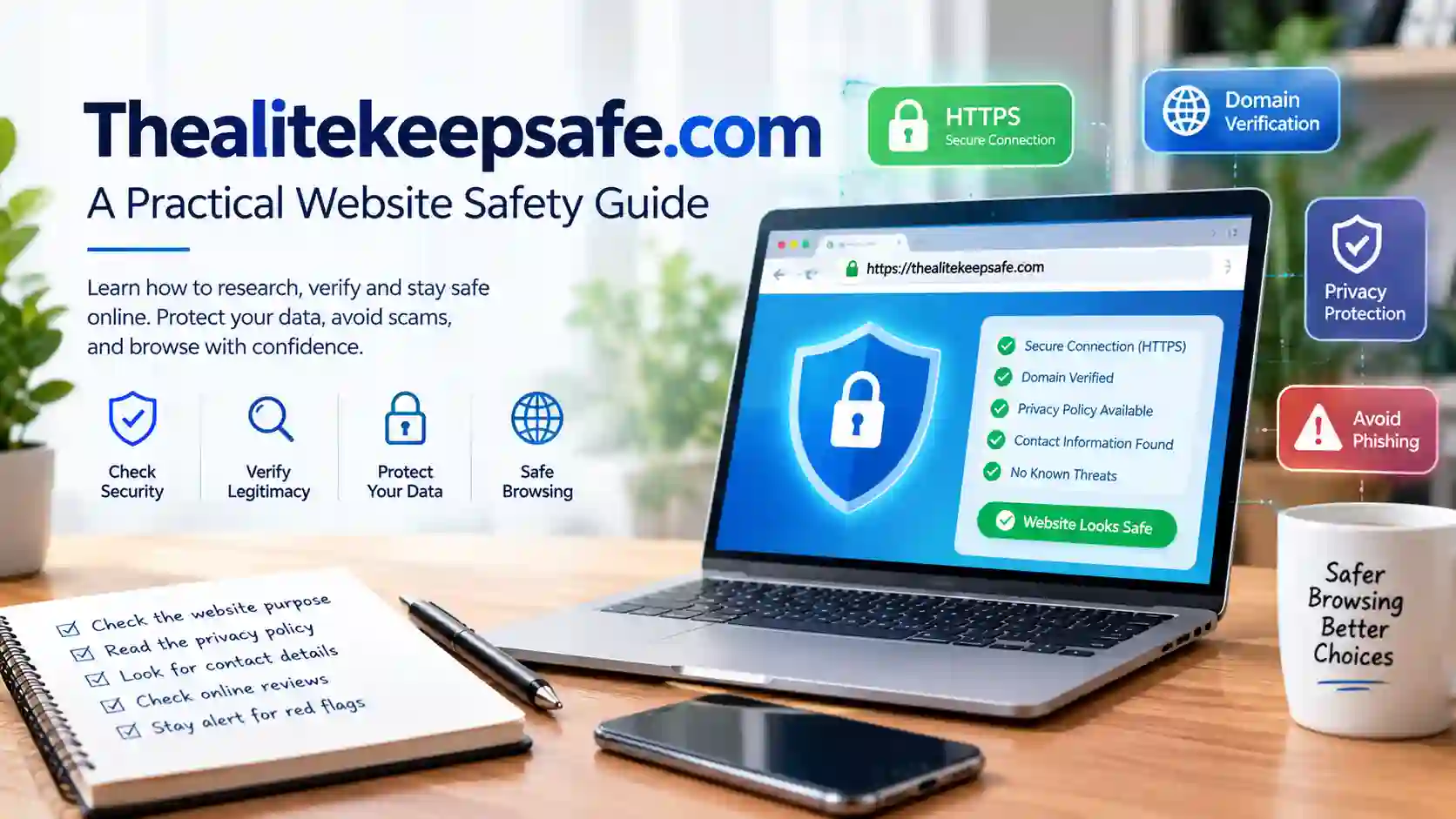
thealitekeepsafe.com is a domain that may attract users looking for information about an unfamiliar website. However, a domain name alone does not explain who operates a website, what it offers, or whether it deserves trust. That uncertainty matters because visitors may share personal details, create accounts, download files, or make payments online.
A careful website check can reduce unnecessary risk. Instead of trusting a domain because it looks professional, users can examine its purpose, security signals, contact details, policies, and online reputation. This guide explains how to research thealitekeepsafe.com responsibly without making unsupported claims about its ownership or services.
What Is thealitekeepsafe.com?
Understanding the Domain Name
The term thealitekeepsafe.com identifies a web domain rather than proving a specific business identity. A domain can belong to a company, project, individual, information site, or online service. Therefore, the name itself cannot confirm what the website does or who controls it.
Users researching thealitekeepsafe.com should first inspect the website’s visible purpose. The homepage should explain its main function in simple language. Clear navigation can also reveal whether the site focuses on products, information, services, downloads, or another purpose.
Why Domain Names Need Context
A domain name can create expectations before visitors read the actual content. Words such as “safe,” “secure,” or “official” can sound reassuring. However, those words do not independently prove that a website provides a secure or trustworthy service.
For that reason, readers should judge the complete website instead of its name. The site’s About page, contact information, privacy policy, terms, and business details can provide useful context. Together, these elements can help establish what the website claims to be.
What Cannot Be Confirmed From a Domain Alone
A domain alone cannot confirm ownership, business registration, product quality, or customer satisfaction. Those details require additional evidence from reliable sources. Similarly, a professional design does not prove that a website operates legitimately.
This distinction is important for thealitekeepsafe.com because unfamiliar domains require more careful research. A responsible assessment should separate verified information from assumptions. That approach protects readers from turning a search result into an unsupported conclusion.
How to Research thealitekeepsafe.com Safely
Start With the Official Website
The first step involves examining the website itself. Users should read the homepage and several main pages before entering sensitive information. Clear explanations can show whether the site has a consistent purpose.
Readers should also check whether important pages work correctly. Broken links, unfinished sections, copied-looking text, and vague descriptions can reduce confidence. However, one small website issue does not automatically prove harmful behavior. The overall pattern matters more than one isolated problem.
Examine Contact Information
A legitimate organization should normally provide a reasonable way to contact it. Depending on the site’s purpose, this may include an email address, contact form, business address, or customer support information.
Users researching thealitekeepsafe.com should compare the contact details with the site’s stated purpose. For example, a business selling products should explain how customers can request help. A website offering information may have simpler contact arrangements.
Read the Privacy Policy
A privacy policy can explain how a website handles visitor information. Users should look for details about collected data, cookies, third-party services, retention, and user rights. The policy should also match the site’s actual functions.
A privacy policy does not automatically prove that a website is trustworthy. Instead, it provides useful information about data practices. Readers can use that information when deciding whether they are comfortable creating an account or sharing personal details.
Security Signals to Check
Look for HTTPS
A browser may show HTTPS when connecting to a website. HTTPS helps protect information while it travels between a browser and server. However, HTTPS alone does not prove that the website operator is trustworthy.
This distinction is important when evaluating thealitekeepsafe.com. A secure connection protects the connection, but it does not validate every claim made by the website. Users should therefore treat HTTPS as one security signal among several.
Check Browser Warnings
Modern browsers can display warnings when they detect certain security problems. Those warnings should never be ignored without investigation. A browser alert may indicate a dangerous connection, suspicious content, or another security concern.
Google’s Safe Browsing service provides information about technologies used to help protect users from dangerous websites. Users can use established security resources when researching unfamiliar domains.
Avoid Downloading Unknown Files
Unknown websites may offer files that appear useful. However, downloads can carry security risks when their source is unclear. Users should avoid opening unexpected executable files, scripts, or documents from unfamiliar websites.
The same principle applies to browser extensions and applications. A request to install extra software deserves careful attention. If the software is unnecessary, avoiding the installation can reduce exposure to potential threats.
How to Judge Website Trustworthiness
Look for Transparent Business Details
Transparency can help users understand who stands behind a website. Business websites often provide information about their company, location, support channels, and operating purpose. The details should remain consistent across the site.
Readers evaluating thealitekeepsafe.com can therefore compare the About page with the contact page. Inconsistencies deserve further research. Still, missing information does not automatically prove wrongdoing, especially for small personal projects.
Check Independent Reputation
A website’s own claims should not be the only evidence. Independent sources can provide additional context about customer experiences, business history, or security concerns. However, reviews also require careful evaluation.
Users should watch for repeated wording, suspiciously similar reviews, and claims without supporting details. A single negative comment should not determine an overall judgment. Likewise, many positive comments do not guarantee that every aspect of a website is safe.
Search for the Domain Separately
Searching the exact domain can reveal useful context. Users can look for independent mentions, technical discussions, reviews, and security reports. They should compare those results with the information shown on the website.
Search results can change over time. Therefore, readers should pay attention to dates and original sources. Recent information usually provides better context for current website behavior than old discussions.
Payment Safety and Personal Information
Avoid Sharing Sensitive Data Too Early
Users should avoid providing sensitive information before understanding a website. This includes unnecessary identity details, financial information, passwords, and security codes. A website should have a clear reason for collecting information.
The Federal Trade Commission provides consumer guidance through its Online Shopping resources. Such official guidance can help users recognize common risks when dealing with unfamiliar online businesses.
Check Payment Methods Carefully
Payment methods can provide important clues about an online transaction. Users should understand what payment method a site accepts and whether dispute protections may apply. They should also review the final price before confirming a transaction. For broader online connectivity and service considerations, readers can also explore this guide to best internet service provider.
Unexpected fees deserve attention. So do unusual payment requests, especially when a website pressures users to send money through difficult-to-reverse methods. A calm review before payment can prevent many avoidable problems.
Protect Account Passwords
Users should avoid reusing important passwords on unfamiliar websites. If an account becomes necessary, a unique password reduces the risk of affecting other accounts. Multi-factor authentication can provide another layer of protection when available.
Security becomes even more important when a website requests personal information. Users should consider whether the account provides enough value to justify the information requested. When the answer is unclear, delaying registration can be sensible.
Common Red Flags on Unfamiliar Websites
Unrealistic Promises
Strong promises can attract attention, but they should also encourage careful research. Claims that sound unusually perfect may require supporting evidence. This is especially true when money, personal data, or downloads are involved.
Readers researching thealitekeepsafe.com should examine specific claims instead of accepting broad promises. A useful website should explain how its service works. Clear limitations can actually make a site appear more transparent than exaggerated guarantees.
Pressure to Act Quickly
Urgency can influence users before they have time to think. Messages that demand immediate payment, account verification, or downloads deserve extra caution. Legitimate services can sometimes use deadlines, but users should still verify them independently.
The Cybersecurity and Infrastructure Security Agency offers guidance on recognizing phishing and related threats. Understanding common social engineering methods can help users identify suspicious requests.
Missing or Confusing Policies
A website that collects personal data should explain important privacy practices. A commercial site should also provide understandable information about purchases, returns, or customer support when those services apply.
Missing policies do not automatically prove harmful behavior. However, they reduce the amount of information available for an informed decision. Users should consider that limitation before sharing sensitive information.
How to Research thealitekeepsafe.com Before Using It
Verify the Website Purpose
The first research question should be simple: what does the website actually do? The answer should appear clearly on the homepage or another primary page. If the purpose remains unclear, users should avoid rushing into registration or payment.
The domain thealitekeepsafe.com should therefore be evaluated through its actual content. Readers can identify the site’s stated purpose and compare it with its navigation. A consistent structure can make further research easier.
Compare Claims With Evidence
A trustworthy research process compares important claims with evidence. For example, business claims can be checked against independent business information. Product claims can be compared with manufacturer documentation when available.
This process helps separate marketing language from verifiable facts. It also prevents a polished webpage from becoming the only source of information. Strong research usually uses several independent signals rather than one attractive page.
Check Technical Information
Technical details can sometimes provide useful background. Domain registration information, certificate details, website history, and hosting information can help researchers understand a domain’s technical footprint. Readers who also want to check their connection performance can learn more about an Xfinity speed test before troubleshooting online access issues.
However, technical data needs careful interpretation. A domain’s registration privacy does not automatically indicate harmful behavior. Likewise, a new domain does not automatically indicate a scam. Technical signals should support research rather than replace it.
What Makes a Website More Trustworthy?
Clear Identity and Purpose
A trustworthy website should make its purpose understandable. Visitors should not need to guess what the organization offers or why it needs their information. Clear language can improve transparency.
For thealitekeepsafe.com, readers can look for consistent descriptions across the homepage, About page, and other major sections. When those descriptions agree, users have a clearer basis for understanding the website.
Accessible Policies
Policies should be easy to find and understandable. Privacy, terms, refund, shipping, or cancellation information may be important depending on the site’s function.
Users should read the policy that affects their intended activity. For example, a shopper should review return rules before purchasing. An account user should understand how personal data may be handled.
Responsive Support
Customer support can also provide useful context. Users can test normal support channels with simple questions before committing to a purchase or subscription. Websites that rely heavily on customer communication may also benefit from understanding contact center software and the tools used to manage customer interactions.
A clear and relevant response can provide additional confidence. However, support quality should remain only one part of the overall assessment. It cannot independently prove that every website claim is accurate.
Safe Browsing Habits for Everyday Users
Keep Software Updated
Browsers and operating systems receive security updates that address known problems. Users should install updates from official sources and avoid unofficial update packages.
Updated software cannot eliminate every online risk. However, regular updates form an important part of basic digital security. This practice applies when visiting unfamiliar websites as well as established platforms.
Use Security Tools
Modern devices often provide security features that can help identify suspicious websites, downloads, and applications. Users should keep those protections active unless they have a specific reason to change them.
Security tools work best alongside careful behavior. Users should still question unexpected downloads, login requests, and payment demands. Technology cannot replace basic online awareness.
Verify Important Messages
Scammers can imitate businesses, support teams, and familiar services. Therefore, users should verify important messages through official channels rather than using links inside unexpected emails or messages.
A separate browser search can help locate an official contact page. Users can then compare the information independently. This approach reduces the chance of following a manipulated link.
What Readers Should Do Before Trusting thealitekeepsafe.com
Use a Simple Research Checklist
A structured checklist can make website research easier. Users can review several basic areas before deciding whether to continue.
- Website purpose and ownership information
- Contact and support details
- Privacy and terms pages
- HTTPS and browser security warnings
- Independent reputation
- Payment and refund information
- Download and installation requests
- Age and history of the domain
This checklist does not produce a guaranteed safety result. Instead, it helps users collect relevant evidence before making a decision. The more important the transaction, the more carefully each area should be reviewed.
Avoid Emotional Decisions
Online pages can create excitement, fear, urgency, or curiosity. Those emotions can make users act before checking basic facts. A short pause can therefore improve online decision-making.
Readers researching thealitekeepsafe.com should focus on evidence rather than emotional impressions. A professional design may look reassuring, while a simple design may still belong to a legitimate organization. The underlying information matters more than appearance.
Recheck Before Important Transactions
Users should conduct another check before sending money or sensitive information. Website content can change, and new warnings can appear after an initial review.
A second review can include current contact details, payment terms, security warnings, and independent mentions. This habit is especially useful for expensive purchases or accounts containing sensitive information.
FAQs
What is thealitekeepsafe.com?
The domain name identifies a website address, but the domain alone does not establish its ownership or purpose. Users should examine the site’s actual content and independent information before deciding how to use it.
Is thealitekeepsafe.com safe?
A website should not be declared safe or unsafe from its domain name alone. Users should review security warnings, privacy information, reputation, ownership details, and the site’s behavior before sharing sensitive information.
How can someone research thealitekeepsafe.com?
Users can inspect the official website, About page, contact details, privacy policy, terms, and independent mentions. They can also check browser warnings and established security resources.
Does HTTPS mean a website is trustworthy?
No. HTTPS helps protect data during transmission, but it does not prove that the website itself is legitimate. Users should evaluate additional trust and security signals.
Should users create an account on an unfamiliar website?
Users should first understand why the account is needed and what information the website collects. A unique password and available multi-factor authentication can improve account security.
Should users make payments on an unfamiliar website?
Users should research the website before making a payment. They should also review prices, refund rules, payment methods, and independent reputation before completing a transaction.
Why are privacy policies important?
Privacy policies explain how a website may collect and use personal information. Reading the policy can help users understand what information they may provide.
Can a professional-looking website still require research?
Yes. Website design alone cannot establish legitimacy. Users should evaluate the site’s identity, claims, policies, security behavior, and independent reputation.
Conclusion
thealitekeepsafe.com should be researched through evidence rather than assumptions based on its domain name. Users can begin with the site’s purpose, ownership information, contact details, policies, security signals, and independent reputation. This method provides a more reliable picture than judging a website by appearance alone.
Online safety also depends on user behavior. Careful readers avoid unnecessary data sharing, verify important claims, check payment terms, and remain cautious with downloads. Before using thealitekeepsafe.com for an important transaction, readers should complete these checks and consult trusted security resources when concerns remain. This research-first approach helps users make informed decisions without relying on unsupported claims.