
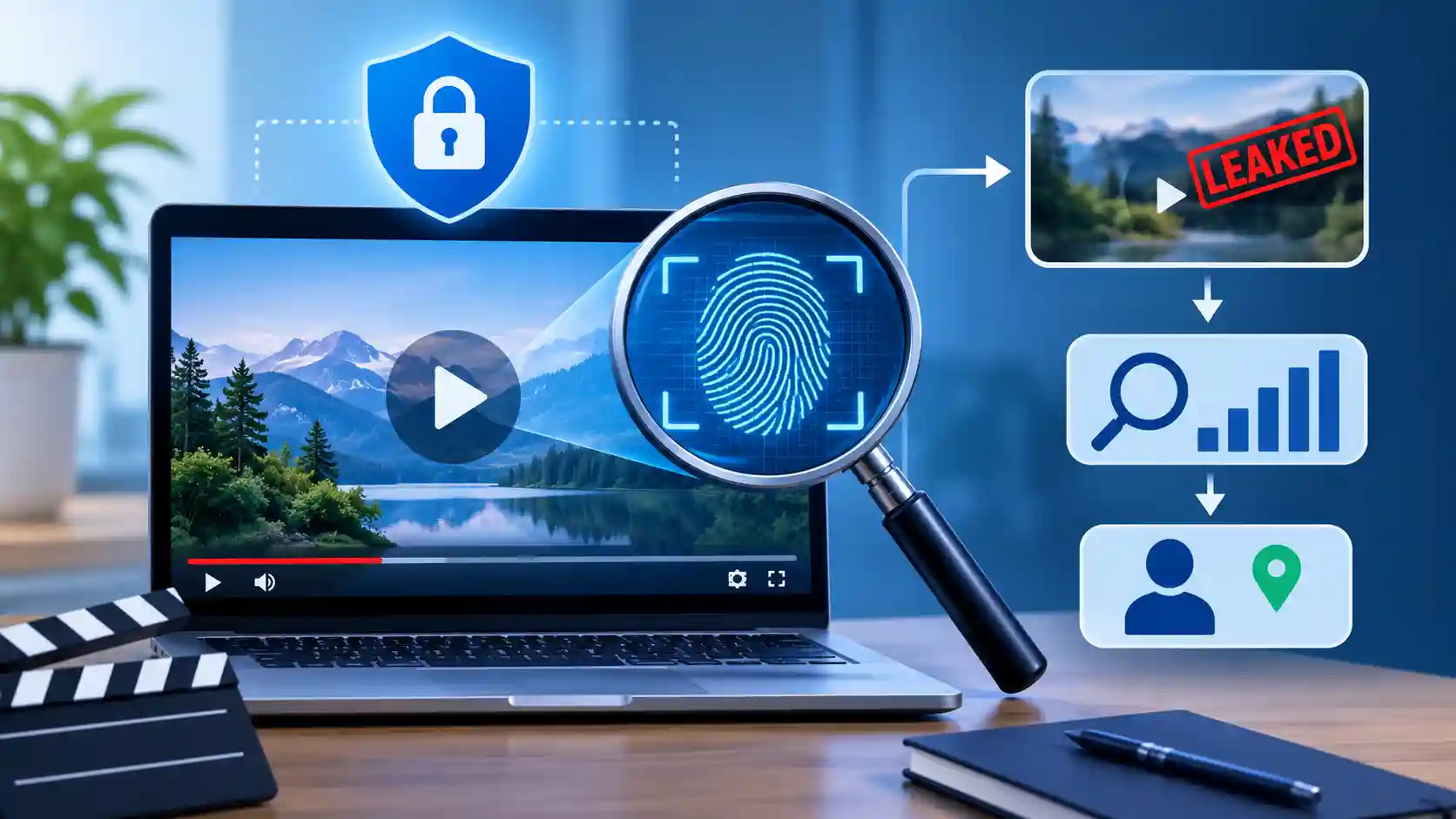
A leaked video can spread through streaming sites, social networks, and file-sharing services before its owner discovers the source. Removing an unauthorized copy may limit its reach, but it does not explain how the material escaped. By using video forensic watermarking, content owners can embed identifying information into videos and gain useful clues about where a leaked copy may have originated.
This approach makes video identification valuable beyond content removal. It helps rights holders connect discovered leaks with playback or delivery records, investigate possible exposure points, and determine appropriate next steps. Understanding this process reveals how technical evidence can support a more organized response to unauthorized sharing.
Understanding Video Identification in Content Protection
Video identification examines a video for information that can establish its origin or distribution context. Forensic watermarking can place an imperceptible identifier within the content. Unlike a visible logo, this signal is designed to remain unobtrusive while carrying information that can later be detected through authorized analysis.
An identifier may relate to a user, playback session, transaction, or delivery instance. If a copy appears somewhere it should not, investigators can analyze it and compare recovered information with service records. The result can provide an investigative lead, but it is not proof on its own. Other evidence remains important.
How Unauthorized Video Sharing Is Discovered
Before tracing a leak, a content owner needs to locate a copy and establish where it is shared. Discovery may begin with a viewer report, partner notification, suspicious streaming link, or routine online monitoring. Copies may use altered titles or appear as embedded players on unfamiliar websites.
The discovery team should capture the location and context before the material disappears. This record helps investigators understand what was found and where examination should focus. Common sources and details include:
- Reports from viewers, subscribers, or distribution partners.
- Monitoring results from websites and social media platforms.
- Links to suspicious streams, downloads, or embedded players.
- The title, episode, event, or version that appears in the copy.
- The time and location where the material was first observed.
These details establish the starting point. A link alone may not reveal who shared the material, so investigators must preserve and examine the video itself.
The Role of Embedded Identifiers in Video Tracking
An embedded forensic watermark can connect a recovered video to its distribution context. It is incorporated into the content and intended to remain imperceptible. When an unauthorized copy is found, a detection process can examine the sample and attempt to recover its identifying signal.
Video forensic watermarking is relevant when a copy has been recorded from playback or redistributed outside the original service. The watermark may distinguish delivery instances, depending on its design. Detection is not guaranteed: sample quality, compression, cropping, overlays, and other transformations can affect recovery. Results need careful interpretation. A watermark may identify a playback instance associated with a leak, but it does not necessarily establish who physically made or uploaded the copy. Accounts can be shared, devices can be accessed by others, and records may require corroboration. Investigators should therefore describe findings precisely and avoid conclusions that extend beyond the available evidence.
Steps Involved in Tracing a Leaked Video
After a sample is located and preserved, investigators can follow a structured process to determine whether it contains a usable identifier and what it may reveal. Each stage should be documented for review.
1. Preserving the Discovered Video
The team retains the sample and records its source, capture time, and relevant details. Preserving an original where possible supports later analysis and comparison.
2. Examining the Video Sample
Analysts confirm that the sample matches the protected title or event. They note edits, missing sections, or quality issues that may affect detection.
3. Extracting the Embedded Identifier
The sample is processed using the relevant detection method. Analysts record whether a signal is found, decoded, and subject to limitations.
4. Matching the Identifier With Distribution Records
If an identifier is recovered, investigators compare it with playback, session, or delivery records, following privacy and retention policies.
5. Confirming the Possible Source
The team reviews the result alongside account activity and other evidence to determine whether it supports a likely source or requires further investigation.
Using Investigation Findings to Address Video Leaks
An identification result should guide the next decision, not automatically determine blame. Depending on the evidence, an owner may review account activity, restrict an exposed session, contact a distribution partner, or report the copy to its hosting platform. Actions should follow contractual responsibilities, privacy requirements, and applicable legal procedures.
Records can reveal the scale and pattern of an incident. If several copies point to related sessions or delivery paths, the organization can review access controls, partner processes, or distribution practices. A documented decision trail explains what action was taken and why. If a platform removes the material, teams can record the report reference and check whether replacement links appear.
Improving Video Protection Through Leak Analysis
An investigation can reveal lessons that reduce future exposure. Content owners can review access permissions, session controls, and whether monitoring covers relevant platforms. Repeated incidents may indicate a process needs adjustment, but each finding should be assessed in context.
Teams should test detection against representative samples. Compression, screen recording, cropping, and overlays can affect results, so testing clarifies what a method can identify. Procedures for evidence handling, record access, and escalation make identification part of ongoing protection. Regular reviews help teams adapt procedures as platforms, partners, and content formats evolve across services.
Conclusion
Video identification helps content owners investigate unauthorized sharing by connecting a recovered copy with clues about its distribution history. The process begins with discovery and preservation, continues through watermark analysis and record matching, and ends with a considered response. Results should be assessed alongside other evidence, with attention to privacy and detection limits.
For media organizations seeking stronger insight into video leaks, Doverunner offers forensic watermarking capabilities designed to support content identification and investigations into unauthorized distribution. Its solutions can help providers analyze recovered video, connect watermark information with distribution context, and strengthen protection for premium content.